Hardwearing Homes for Quaker Parrots
A guide to selecting and furnishing a robust cage for a Quaker parrot that accounts for their intelligence, curiosity, and tendency to chew through standard materials.

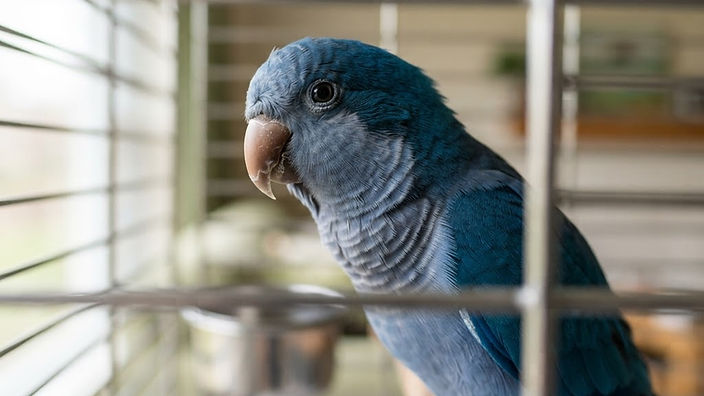
Right Size and Spacing
A Quaker parrot needs significant horizontal room to stretch its wings and move between perches with agility. A cage should measure at least twenty-four inches wide, twenty-four inches deep, and thirty inches high. Anything smaller turns a cage into a prison rather than a living space, leading to stereotypical pacing and irritability.
The bar spacing must sit between five-eighths and three-quarters of an inch. If the spacing is too wide, a small Quaker could wedge its head through the wire. If the spacing is too narrow, the cage often feels flimsy. Look for heavy-gauge wire that does not flex when pressed with a thumb, as Quakers possess enough jaw strength to bend thin, cheap metal over time.
Security for Smart Beaks
Quakers are notorious for learning how to operate slide-bolt latches within a few days of arrival. A bird that realizes it can lift a gate by hooking its lower mandible under the bolt will never stop trying. I prefer cages with integrated spring-loaded locks or heavy-duty carabiners that require two distinct, coordinated movements to open.
Check every feeder door for weaknesses. Some manufacturers use plastic clips that break after a few months of daily usage. I replace these immediately with stainless steel quick-link connectors. A bird that manages to push open a feeder door often spends the rest of its day wandering the house, finding hazards that were never meant to be reached.
Durable Internal Layouts
Do not fill the cage with soft wooden dowels. A Quaker will chew through a standard softwood perch in a week, leaving sharp, splintered ends that can damage sensitive feet. Instead, use natural hardwood branches like manzanita or apple wood. These provide varied thicknesses, which keeps the foot muscles flexible and prevents pressure sores.
Position perches away from food and water bowls to keep the area hygienic. I arrange one high, favored spot near the top for sleeping and two lower, sturdier branches for exercise. Keeping the center of the cage clear allows the bird to flap its wings fully without hitting toys, which prevents feather breakage and encourages confidence.
Built to Withstand Chewing
The Quaker beak functions like a pair of high-pressure bolt cutters. If you give them a plastic toy that feels thin, expect it to be reduced to shards in minutes. I look for thick, untreated vegetable-tanned leather strips or heavy cotton rope for climbing. These materials wear down gradually rather than shattering into dangerous, jagged plastic pieces.
Avoid using metal chains that have large gaps where a toe or beak could become pinned. Stick to heavy-gauge stainless steel chain if metal is necessary. When selecting hanging toys, choose hardware that is welded shut rather than linked together, as a clever Quaker will work a linked chain apart until it snaps, creating a tangle of wire in the cage.
Hygiene and Material Safety
Cleaning a cage should not involve harsh chemicals that linger in the air. I use a simple mixture of warm water and vinegar to wipe down the trays and bars every few days. The tray should slide out easily for a daily swap of paper liners. If the tray sticks or requires force to pull out, you will eventually become lazy about cleaning it, which leads to bacterial buildup.
Check the base of the cage for hidden gaps where dropped seeds and fecal matter collect. A well-designed cage features a powder-coated or stainless steel finish that does not chip when scraped. If you see paint flaking off, remove that accessory immediately, as ingested metal shards cause severe internal damage that is often impossible to reverse.
Monitoring Your Bird
A healthy Quaker is an active, vocal bird that interacts with its environment throughout the day. If you notice your bird spending long periods sitting puffed up at the bottom of the cage, or if it stops interacting with toys that were previously favorites, take note. Watch for changes in droppings, such as a sudden shift in color or consistency, which are early signs that something is wrong.
Weight loss happens quickly in these birds. Using a small gram scale to track their morning weight provides a baseline for what is normal. If the weight drops by more than a few grams over a short period, it is time for a professional assessment. Take your bird to an avian vet for anything medical.