Living With the Wild Quaker Mind
Quaker parrots are the only parrot species that build stick nests in the wild. Learn how this unique engineering instinct shapes their behavior in your home.
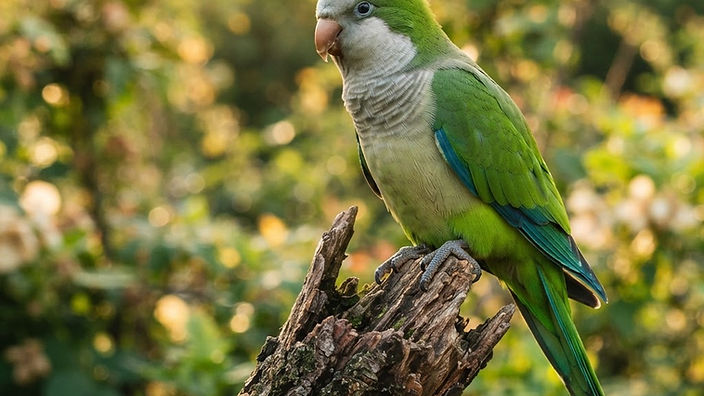
Masters of Stick Architecture
In the vast scrublands of Argentina, monk parakeets do something no other parrot on earth attempts. They gather hundreds of thorny twigs to construct massive, colonial stick fortresses high in trees or on utility poles. These structures are not just simple cups or holes. They are multi-room apartment complexes that house dozens of breeding pairs, each with their own secure, tunnel-like entrance designed to baffle predators.
Your bird in a living room cage still possesses this frantic, architectural urge. They do not have the space to build a city, but they will try to turn their corner of your home into a fortress. You might find them trying to weave bits of paper, stray twist ties, or strips of cardboard into the cage bars. It is not just idle play. It is an instinctual drive to define territory through construction.
The Territorial Nesting Instinct
This obsession with structure leads to a specific type of territorial aggression that many owners find baffling. A wild monk parakeet will defend its chamber against snakes, hawks, and rival parrots with surprising ferocity. When a pet Quaker reaches sexual maturity, usually between two and four years of age, this defensiveness often shifts to the cage or a specific sleeping hut. They start to treat their perceived nest site as a strategic stronghold that must be held at all costs.
You may notice your bird lunging at hands that approach the cage door, or even fluffing their feathers and emitting a specific, raspy growl when you walk past their favorite sleeping spot. This behavior is not a character flaw. It is a biological imperative. They are telling you that they have invested energy into their environment and they are ready to defend their investment against any perceived intrusion.
Managing The Stronghold
To keep a Quaker, you need to understand that the cage is their bunker. It is helpful to avoid reaching directly into that bunker when the bird is in a high-arousal, defensive state. Instead of forcing a hand into the cage to retrieve the bird, try training them to step onto a target stick or move to an external perch when asked. This keeps their core defensive zone intact while allowing you to interact with them on neutral ground.
Constant rearranging of the cage interior can also mitigate this intense territoriality. By switching around perches and toy locations every week, you prevent the bird from declaring one specific corner as their impregnable fort. A Quaker who cannot map their nest permanently is often less inclined to aggressively defend it. It keeps their focus on you rather than on protecting their stationary architecture.
High Energy Social Networks
In the wild, monk parakeets are social butterflies. They spend their entire lives in constant contact with neighbors, chattering and squabbling in their communal nest structures. This makes them incredibly prone to separation anxiety if they are left in total silence for long stretches of the day. They expect to be part of the flock commotion at all times, and they struggle when they are cut off from the noise of the household.
If your bird is shrieking the moment you leave the room, they are likely trying to signal the flock to return. They are hardwired for constant, high-frequency interaction. Giving them a radio or a background soundscape does little to satisfy this. They want to see you, hear you, and participate in your domestic chores. A lonely Quaker is a stressed Quaker, and stress in this species often manifests as rapid, destructive chewing or feather picking.
Watch The Body Language
Quakers are subtle, then they are suddenly not. Before a full-blown bite or a territorial display, look for the subtle physical markers. A tail that fans out slightly while the bird holds their body very still is a warning. If they lean forward and pin their eyes, they are deciding whether or not to engage. If you see this, retreat immediately. Do not test them.
Another specific sign is the head-bobbing transition. While some bobbing is play, a rigid, rhythmic head-bobbing directed squarely at your finger is often a precursor to a bite. They are calibrating their strike. Watching these small, early indicators allows you to step back and let the bird de-escalate before a conflict occurs. Your goal is to be a partner, not an adversary they need to push away.
Routine And Bird Health
Maintaining a consistent schedule is the best way to keep a bird that is prone to such high-strung instincts. Knowing when the cage door opens, when food appears, and when it is time to sleep gives them a sense of safety that reduces their need to build and defend. Keep their daylight hours strictly regulated to help manage their hormonal cycles, which can trigger the worst of the nesting behaviors.
Always observe their daily weight and droppings for changes, as they are expert at hiding discomfort until they can no longer keep up appearances. Contact an avian vet for anything medical.